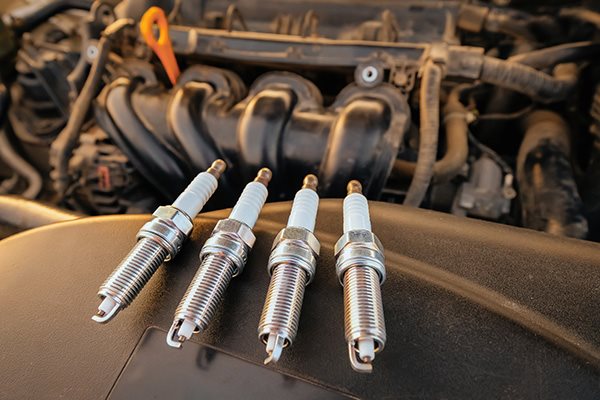
Your engine runs, but it doesn't pull quite as confidently when you merge onto a highway. Then you notice a little shaking at idle or more frequent stops for gas. Several systems produce those symptoms, and spark plugs are one place to start looking. Small ignition problems don't always announce themselves with an immediate breakdown. Learning how plug wear affects combustion helps you decide what to report during an inspection.
What Happens Inside a Cylinder When a Plug Wears
Gasoline engines depend on a precisely timed spark to ignite the air and fuel mixture. The plug's electrodes must create that spark repeatedly through changing temperatures and cylinder pressures. As the electrodes erode, the gap between them changes. A plug with oil deposits, cracked ceramic insulation, or damaged threads presents a different problem. The engine's design determines how much deterioration it tolerates before performance changes.
An inconsistent spark leaves one cylinder contributing less power than expected. You often feel that imbalance as a tremor or hesitation long before a complete failure. The engine computer may record misfire information even when the check engine light hasn't appeared. Regular maintenance lowers the risk of reaching that stage with plugs well past their specified service interval.
Acceleration Often Reveals Problems First
Combustion pressure rises when you ask for more power, especially while climbing a hill or accelerating into traffic. That makes a reliable spark more demanding. A plug that fires adequately at idle sometimes misfires under load. The car then stumbles for a moment, feels sluggish, or delivers power unevenly. If the check engine light starts flashing while the engine shakes, reduce load and arrange service because active misfires risk damaging the catalytic converter.
Does the hesitation disappear as soon as you ease off the accelerator? That detail guides the test sequence, although it doesn't prove a spark plug has failed. Ignition coils, fuel delivery, boost leaks on turbocharged engines, and compression faults create similar behavior. We compare the symptom with engine data and test the systems that fit the conditions before choosing replacement parts.
Fuel Efficiency Changes Can Be Subtle
A healthy cylinder converts its fuel charge into power. Repeated misfires waste some of that opportunity, and a driver often presses the accelerator harder to compensate for weak response.
Fuel consumption sometimes rises, particularly when rough running has become noticeable. But one low-mileage tank doesn't establish an ignition fault. Traffic, tire pressure, seasonal fuel blends, and short trips influence the number on your dashboard.
Compare several similar trips and monitor the engine's behavior. A sudden decline combined with rough idle or misfire codes calls for a more focused inspection than mileage alone. We check the ignition components alongside relevant fuel and air readings, since a wrong sensor signal or restricted injector also changes performance. Replacing healthy plugs won't cure an unrelated fuel-economy problem.
Ignition Coils and Spark Plugs Work as a Team
The ignition coil supplies the high voltage needed to cross the gap at the plug electrodes. Modern engines often have one coil per cylinder, though designs vary. Heat, moisture, damaged coil boots, and poor wiring connections interrupt spark delivery. A weak coil and a worn plug sometimes produce the same misfire code, so a scanner cannot identify which component is at fault by itself.
Some technicians perform controlled component swaps where the manufacturer's test procedure permits them. Electrical checks and plug inspection provide other clues. If a misfire follows one coil to another cylinder, the evidence becomes stronger. If it stays in place, the next tests may focus on the plug, injector, wiring, or mechanical condition. A clear explanation prevents a costly blanket replacement of parts that still work.
Correct Plugs and Installation Procedures Protect the Engine
Spark plug specifications include heat range, electrode style, required gap, and installation torque. The correct choice often depends on the exact engine code, not simply the model name. A plug advertised as high performance isn't necessarily approved for your engine. Improper installation can damage cylinder-head threads, create poor electrical contact, or leave a plug loose enough to leak combustion pressure.
Some engines place the plugs deep beneath covers and require careful handling of coil connectors and seals. Oil found inside a plug well needs investigation before fresh parts go in. We review the manufacturer's maintenance schedule and inspect the surrounding components for leaks or damage. The goal is a lasting repair, not a temporary improvement that disappears after the next few drives.
Clues to Bring to Your Appointment
An accurate description often saves more time than guessing which part failed. Note the speed, engine temperature, and load when the hesitation appears. Tell us if the problem began after washing the engine, driving through heavy rain, or having other work completed. Those details direct inspection toward moisture-sensitive connections or recently disturbed components. A steady check engine light and a flashing one don't carry the same urgency.
Report these observations:
If the engine stalls repeatedly or shakes violently, avoid normal driving until it's assessed. Early inspection protects the catalytic converter and helps keep a smaller ignition fault from becoming a more expensive repair.
Verify the Engine Runs Properly After Service
Once testing identifies the cause, the repair should remove the original symptom, not merely switch off the warning light. Misfire counts, idle quality, and acceleration under a safe test load help confirm normal operation. Some vehicles need additional driving before emissions monitors report ready after code clearing. You'll know what was repaired and what remains scheduled maintenance, so you don't leave with an unexplained parts list.
Fuel efficiency should be monitored over multiple comparable trips after service. A strong, predictable response when accelerating is often the first difference you notice. If fuel use stays high, investigate other causes separately. Fresh plugs aren't a cure for every fuel-economy concern. Reliable engine performance comes from matching the work to the evidence.
Get Spark Plug and Engine Performance Inspection in Arlington, TX, With Euro Car Tech
Euro Car Tech in Arlington, TX, helps drivers investigate ignition misfires, hesitation, and fuel-efficiency concerns. We'll explain what the testing reveals and which repairs the engine needs.
Call Euro Car Tech or schedule an ignition system inspection online.