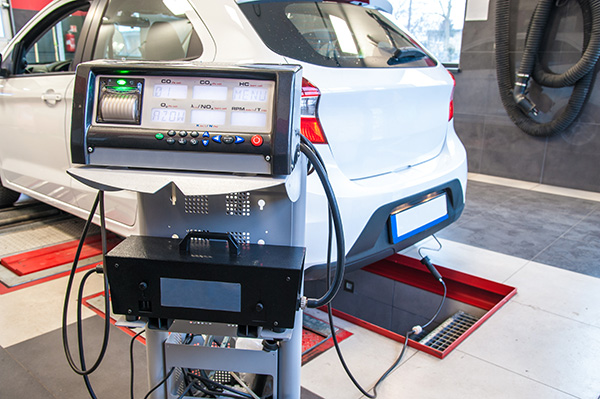
An emissions test can catch drivers off guard because the car does not always feel like something is wrong. It may start normally, drive well, and show no obvious loss of power. Then it fails the test because the computer has found a problem that affects how the engine burns fuel or controls exhaust emissions.
Some failures are straightforward. Others take more testing because several systems work together to keep emissions within the expected range. When we inspect a vehicle after a failed test, the first step is finding out exactly why it failed instead of replacing parts based on the test result alone.
1. The Check Engine Light Is On
On vehicles tested through the onboard diagnostic system, an active check engine light is one of the quickest ways to fail. The light means the computer has stored a fault that affects engine operation, fuel control, or emissions equipment.
A trouble code does not automatically tell us which part needs replacement. A lean code, for example, might come from a vacuum leak, weak fuel delivery, exhaust leak, or sensor problem. We read the codes and look at live data before deciding where the actual fault starts.
2. The EVAP System Has a Leak
The EVAP system keeps gasoline vapors from escaping from the fuel tank into the atmosphere. It uses parts such as the fuel cap, vapor hoses, purge valve, vent valve, charcoal canister, and pressure sensor to contain and control those vapors.
A loose fuel cap is the simple possibility, but cracked hoses and failed valves are common too. Small leaks can be difficult to see, which is why smoke testing is useful. We can introduce smoke into the system and watch for a leak that would never show up during a basic visual check.
3. The Engine Is Misfiring
A misfire means one or more cylinders are not burning the air-fuel mixture correctly. Worn spark plugs, weak ignition coils, damaged wires, fuel injector problems, vacuum leaks, or low compression can all be involved.
The car does not have to shake badly for a misfire to affect emissions. An intermittent miss can send unburned fuel and excess oxygen into the exhaust, changing what the oxygen sensors and catalytic converter see. If the check engine light flashes, the misfire is severe enough that continued driving can overheat the catalytic converter.
4. An Oxygen Sensor Is Giving Bad Information
Oxygen sensors monitor the exhaust and help the engine computer adjust fuel delivery. Some sensors are used mainly for fuel control, while others monitor catalytic converter performance.
A slow or inaccurate sensor can make the engine run richer or leaner than intended, but we do not condemn the sensor just because a code mentions it. An exhaust leak, fuel problem, vacuum leak, or wiring fault can make a healthy sensor report readings that look wrong. Checking how the sensor responds while the engine is running gives much better information than the code by itself.
5. The Catalytic Converter Is Not Working Properly
The catalytic converter helps turn harmful exhaust gases into less harmful compounds before they leave the tailpipe. If the converter becomes damaged, contaminated, overheated, or worn internally, the vehicle can fail an emissions test even when it still drives fairly well.
Converter problems also have a cause. Repeated misfires, excessive oil consumption, rich fuel mixtures, or coolant entering the combustion chamber can damage the catalyst over time. Replacing the converter without correcting the condition that ruined it can put the new one on the same path. A proper inspection should look upstream before the converter gets blamed.
6. The Engine Is Running Too Rich or Too Lean
An engine running rich is getting too much fuel or not enough air. A lean condition is the opposite. Either one changes exhaust emissions and can trigger fault codes or push readings outside the acceptable range.
Possible causes include: dirty airflow sensors, vacuum leaks, leaking injectors, low fuel pressure, intake problems, exhaust leaks, or incorrect sensor data. Fuel trim readings show how much correction the computer makes while the engine runs. Regular maintenance also helps because neglected spark plugs, filters, and basic engine service can make an emissions problem harder to diagnose.
Get Emissions Test Diagnostics In Arlington, TX, With Euro Car Tech
If your vehicle failed an emissions test or the check engine light is keeping it from passing, Euro Car Tech in Arlington, TX, can test the engine management and emissions systems to find the reason behind the failure.
Schedule a visit so we can repair the problem before you return for another emissions test.