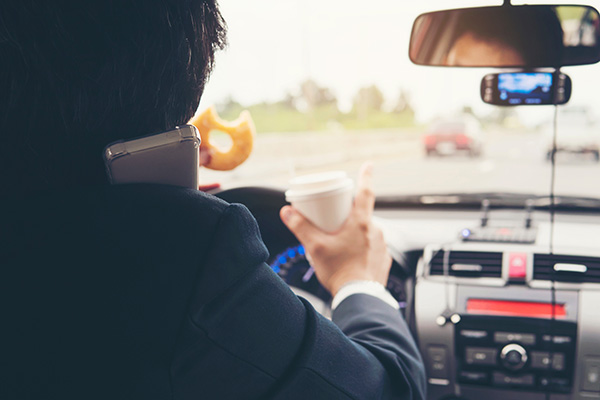
Eating behind the wheel feels ordinary because the car keeps moving while you do it. The problem is what happens when the road changes during the moment you're opening a wrapper, reaching for a drink, or looking down at a spill.
Driving requires your eyes, hands, and decisions to work together. Food interrupts each in different ways. A quick bite becomes several small tasks, and those tasks sometimes arrive exactly when traffic brakes or someone enters your lane.
At Euro Car Tech, we help drivers maintain their vehicles for predictable braking and handling. Drivers still need time to recognize the hazard and use those systems.
How Eating Changes Your View of the Road
Finding food in a bag or checking a cup pulls your eyes from traffic. Even a short glance removes the information you need about brake lights, lane position, and nearby vehicles. For perspective, a vehicle traveling at 60 mph covers 88 feet in 1 second. Looking away for 2 seconds means traveling about 176 feet without watching the road ahead. That calculation describes distance traveled, not your car's stopping distance.
A familiar route doesn't shorten that distance. Someone turning across the road or braking suddenly is still a new event you have to see.
Food and Drinks Take a Hand Off Driving
One hand holding food leaves less flexibility for steering. Opening packaging, retrieving a dropped item, or managing a spill adds movements the driver didn't plan when taking the first bite.
A sudden maneuver is harder when you also have something in your hand. The instinct to save a cup or keep food from falling sometimes competes with the need to control the car.
Set food aside before moving. A passenger can manage meals for themselves and others, but the driver should eat only during a parked stop. Passing items to the driver still creates another task at the wheel.
Thinking About a Spill Delays the Driving Response
Distraction continues even when your eyes return to the windshield. You might still be thinking about the drink running across the console or whether the food landed on your clothes. That mental task slows how quickly you interpret the traffic scene. Seeing brake lights isn't the same as immediately recognizing how hard the vehicles ahead are stopping.
Hot drinks create another complication. A painful spill triggers a reflexive movement at a moment when the car still needs controlled steering and braking. Choose a safe parking place to deal with it rather than reaching around while the vehicle moves.
If something falls near the pedals, avoid trying to recover it in traffic. Stop safely, secure the car, and remove the obstruction before continuing.
Traffic Queues Still Require Driving Decisions
Slow traffic sometimes makes eating seem safer. Speeds are lower, but the car still shares close space with vehicles, pedestrians, and changing signals.
A driver looking into a bag misses a queue that starts moving or stops again. That leads to a late acceleration, a sharp brake application, or a small collision that was entirely avoidable.
Parking the car gives you a real pause. A red light is a temporary traffic condition that still requires watching the intersection and responding when it changes. Finish the meal before beginning the next part of the trip.
Eating-Related Driving Distractions to Avoid
Keep these tasks for a safe stop:
- Opening containers or searching inside food bags
- Looking down to handle a spill
- Reaching for a dropped item
- Balancing a drink while steering
The list is short because the basic decision is simple. If the food needs your hands or eyes, it should wait until the car is parked.
Family Meal Stops During a Car Trip
Passengers add another layer when the driver is also handing back snacks, finding napkins, or checking what a child is doing. Turning to the rear seat leaves the road unwatched.
Have another adult manage those tasks when one is riding along. If you're the only adult, pull into a safe parking area before helping. Keep each child secured in the restraint required for their size and the seat manufacturer's instructions.
Plan breaks and prepare passenger supplies before leaving. A hungry child changes the travel plan, but handling the request while steering creates a separate risk. The break is part of the trip, not a failure to stay on schedule.
Build a meal into your route where it is practical. Around Arlington, a parking area at a planned stop gives you time to eat, check the next directions, and resume driving without juggling those tasks.
Store bags and loose containers where they won't roll into the driver's area. Cup holders reduce movement, but they don't eliminate the distraction of drinking or opening a lid while driving.
Keep the meal break separate from phone use and route changes too. A parked pause handles several needs before the car moves again. That reduces the temptation to solve them one by one in traffic.
Brakes and Tires Still Need Regular Checks
A quick reaction only helps when the vehicle responds correctly. Worn tires, pulling brakes, or a soft pedal reduce the control available after you notice a hazard.
Report those changes early. We inspect the affected systems and explain the findings, including whether the vehicle needs repair before continued use. A symptom that seems manageable during ordinary driving often becomes harder during an emergency stop.
Keep the windshield clean and adjust your seating position before departure. Clear vision and reachable controls support the driver, while putting food away removes an avoidable competing task.
Vehicle Maintenance at Euro Car Tech
Euro Car Tech in Arlington, TX, can review brake, tire, steering, and other vehicle concerns that affect your response on the road. Describe any new pulling, vibration, or changes in braking so we can inspect the car and discuss needed repairs.
Call Euro Car Tech to schedule your next vehicle service and address a problem before your next drive.