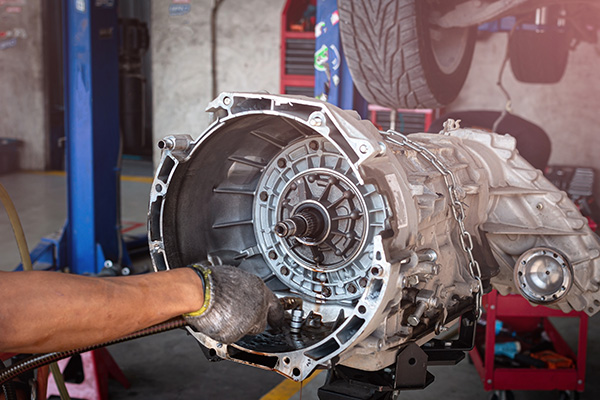
Your BMW shifts acceptably leaving the driveway, then starts flaring between gears after the transmission warms up. Perhaps reverse takes a moment to engage, or a downshift delivers a thump just before the car stops. A transmission warning makes it easy to assume the clutches and gears are already finished.
Several different faults can produce that same uncomfortable drive. Before comparing replacement prices, the useful question is what the transmission was commanded to do and why it didn't complete the shift correctly. A harsh shift and a slipping clutch don't necessarily begin with the same failed part.
The Valve Body Controls How Clutches Apply
Inside an automatic transmission, fluid pressure applies clutches that select different gear ratios. The valve body directs that fluid through passages and valves, with solenoids adjusting its flow and pressure. On many BMW transmissions, these hydraulic and electronic controls are grouped into a mechatronic assembly.
Wear in a valve bore, a sticking valve, a leaking seal, or a solenoid fault can disrupt clutch application. The driver may feel late engagement, a flare, or a harsh shift even when the original problem is in the controls. The valve body is an internal component; the key question is whether the repair also requires major clutch or gear work.
Warm Shifting Problems Don't Prove Clutch Failure
Fluid becomes less viscous as it heats up. Excessive clearance in a worn hydraulic circuit can then allow more pressure to escape, making a problem easier to reproduce after a longer drive. A transmission that behaves differently when hot therefore deserves testing at the temperature where it misbehaves.
Clutch wear can also become more apparent when hot, so that pattern doesn't clear the rest of the transmission. At our shop, the road test follows the customer's complaint closely: which shift, light or heavier throttle, and how long the car has been running. Testing only during a short drive can miss the fault entirely.
Fault Codes Describe the Result, Not Always the Cause
A gear-ratio fault means the measured speeds don't agree with the expected relationship. It doesn't automatically identify worn friction plates. Inadequate hydraulic pressure, an electrical control fault, or an internal mechanical problem can each prevent the requested ratio from being held.
Useful scan data includes input and output speeds, selected gear, transmission temperature, and available pressure or solenoid information. The available readings vary by transmission. A solenoid code also calls for checking power, wiring, and connections before ordering a complete mechatronic assembly. A fault description is not a parts list.
Fluid Level and Sealing Problems Come First
Low fluid can interfere with pressure and clutch operation. The level must be checked using the correct temperature and procedure, not judged by how much comes out of a plug on a cold transmission. External leaks and applicable internal sealing sleeves or adapters also need attention.
The fluid specification must match the actual transmission, not just the BMW badge. Service records are useful when symptoms began after fluid work or another repair. Fresh fluid won't rebuild a worn valve bore or repair damaged clutches, but you must address an incorrect level or fluid before evaluating operation.
Debris Helps Decide How Far the Repair Goes
When pan removal is justified, the material inside gives information that scan data cannot. Fine residue on magnets is different from metal fragments or a heavy accumulation of friction material. Burnt fluid and substantial debris increase concern about damage beyond the valve body, although neither smell nor color identifies the failed component alone.
A valve-body repair is more reasonable when testing identifies a hydraulic fault and the rest of the unit has evidence of usable condition. It becomes less attractive if damaged clutches are already shedding material through the system. Repairing the control problem won't restore friction material that has worn away.
Adaptation Resets Aren't a Repair by Themselves
Transmission adaptations adjust operation as components and operating conditions change. Clearing those values is not a reliable cure for slipping or harsh shifts. Some repairs require a specific initialization or relearn, but that procedure belongs after you address the underlying fault.
An inspection should end with an explanation of the evidence and the remaining uncertainty, especially before expensive internal work. Regular maintenance records help establish what fluid service has occurred. If the engine revs without matching acceleration or engagement becomes unreliable, avoid repeated hard acceleration and have the vehicle assessed before further clutch damage develops.
Get BMW Automatic Transmission Repair In Arlington, TX, With Euro Car Tech
Euro Car Tech in Arlington, TX, can evaluate shifting complaints and help determine whether the evidence points to valve-body controls, fluid pressure, or deeper transmission wear.
Contact us to schedule BMW transmission diagnostics and discuss the symptoms before choosing a repair.